2020ko mar. 24a(e)an CAEZIK SF & Fantasy(e)n argitaratua.
ASIN:
B082838YYY
5 izar
(25 berrikuspen)
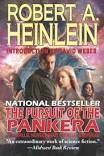
Robert A. Heinlein wrote The Number of the Beast, which was published in 1980. In the book Zeb, Deety, Hilda and Jake are ambushed by the alien “Black Hats” and barely escape with their lives on a specially configured vehicle (the Gay Deceiver) which can travel along various planes of existence, allowing them to visit parallel universes.
However, unknown to most fans, Heinlein had already written a “parallel” novel about the four characters and parallel universes in 1977. He effectively wrote two parallel novels about parallel universes. The novels share the same start, but as soon as the Gay Deceiver is used to transport them to a parallel universe, each book transports them to a totally different parallel world.
From that point on the plot lines diverge completely. While The Number of the Beast morphs into something very different, more representative of later Heinlein works, The Pursuit of the Pankera …
Robert A. Heinlein wrote The Number of the Beast, which was published in 1980. In the book Zeb, Deety, Hilda and Jake are ambushed by the alien “Black Hats” and barely escape with their lives on a specially configured vehicle (the Gay Deceiver) which can travel along various planes of existence, allowing them to visit parallel universes.
However, unknown to most fans, Heinlein had already written a “parallel” novel about the four characters and parallel universes in 1977. He effectively wrote two parallel novels about parallel universes. The novels share the same start, but as soon as the Gay Deceiver is used to transport them to a parallel universe, each book transports them to a totally different parallel world.
From that point on the plot lines diverge completely. While The Number of the Beast morphs into something very different, more representative of later Heinlein works, The Pursuit of the Pankera remains on target with a much more traditional Heinleinesque storyline and ending, reminiscent of his earlier works.
The Pursuit of the Pankera was never published and there have been many competing theories as to why (including significant copyright issues in 1977). Over time the manuscript was largely forgotten but survived in fragments. A recent re-examination of these fragments, however, made it clear that put together in the right order they constituted the complete novel.
And here it finally is: Robert A. Heinlein’s audacious experiment. A fitting farewell from one of the most inventive science fiction writers to have ever lived: a parallel novel about parallel universes as well as a great adventure pitting the forces of good versus evil only the way Heinlein could do.
I'd like to note that there's nothing inherently wrong with this classic. Tolkien paved the way for high fantasy and has inspired so many phenomenal works of fiction, from novels to films to tabletop RPGs. But the narrative style of The Lord of the Rings is dry and was difficult to engage with after the hobbits left the Shire. I respect Tolkien and am certain my stories would be vastly different without his influence, but I'd much rather watch the condensed and visually striking films than slog through another thirty hours of text. I understand the draw and loyalty of Tolkien's biggest fans, he simply isn't for me. After struggling through the text for weeks, I finally called it at the 25% mark.
If you are in need of a thoughtful, well written review of the three books constituting the Lord of the Rings trilogy, please look elsewhere.
I decided to reread J.R.R. Tolkien's "The Lord of the Rings" for the fist time since I read the trilogy of books when I was in Junior High School some forty years ago. The blue, green and red paperback books purchased from a Scholastic Book Fair that first I read did not survive my many house moves in the intervening years. Much later, I had purchased a copy of the 1991 Special Edition beautifully illustrated by Alan Lee which sat on a bookshelf for several years until recently unread. When I finally did pull the heavy single volume down, I found it almost too heavy to hold in my lap to read. So I went out to my local used book store (Recycled Books in …
If you are in need of a thoughtful, well written review of the three books constituting the Lord of the Rings trilogy, please look elsewhere.
I decided to reread J.R.R. Tolkien's "The Lord of the Rings" for the fist time since I read the trilogy of books when I was in Junior High School some forty years ago. The blue, green and red paperback books purchased from a Scholastic Book Fair that first I read did not survive my many house moves in the intervening years. Much later, I had purchased a copy of the 1991 Special Edition beautifully illustrated by Alan Lee which sat on a bookshelf for several years until recently unread. When I finally did pull the heavy single volume down, I found it almost too heavy to hold in my lap to read. So I went out to my local used book store (Recycled Books in San Jose) and bought the slightly smaller, hardcover movie tie-in edition that is the subject of this review.
Because this edition of the LotR trilogy was first printed in 1994, the only evidence of the Peter Jackson film adaptation is limited to the graphic design of the dust jacket. The plates used to print the book I read were apparently worn and left some blemishes which rendered one or two letters illegible on a few of he pages, but the text overall was perfectly comprehensible.
The Lord of the Rings trilogy of books was originally published in the middle of the previous century and has been read by millions of readers in several languages around the world. Consequently, the books have been extensively reviewed by many professional journalists over the decades. The purpose of this review is to encourage readers of the LotR trilogy to not stop reading at the apparent climax of the story that occurs in the middle of "Book Six". I found the closing chapters to be a necessary and rewarding "cool-down" from the world-ending consequence, action and questing of the preceding 930 or so pages. The penultimate chapter was particularly fun to read as battle-hardened heroes return from their quest to find their home in disarray and must rally fellow villagers to set things right.
Hirugarrena irakurri ostean iruzkinduko dut istorio osoa, baina bigarren honen amaiera oso goian geratu da! Hori bai, estruktura nahasiago bat eskertu izango nuke.
Review of 'The Fellowship of the Ring: Being the First Part of The Lord of the Rings' on 'Goodreads'
5 izar
Berriz hasi naiz irakurtzen Eraztunen Jauna, ingelesez oraingoan. Nerabe nintzen irakurri nuen azkenaldian, eta bigarrenez irakurtzeak, egia esan, ahaztuta nituen hainbat detaile birgogoratzea ekarri dit.
Fantasiazko generoa gorpuztu duen obra nagusienetakoa, dudarik gabe. Bikaina.
Review of 'The Fellowship of the Ring' on 'Goodreads'
5 izar
In 1980 Heinlein published a novel called The Number of the Beast. It involved parallel universes, The World as Fiction, and dragged in Lazarus Long, as Heinlein seemed to do in most of his later books. While parts of it were fun, it was also confusing and disjointed in my opinion. I will read any Heinlein for the writing alone, so I am a fan (in fact, I was for a time the webmaster for The Heinlein Society), but I can see that some of his stuff is better than others. So when I heard there was an alternate version of this novel, I had to check it out. And The Pursuit of the Pankera keeps the same basic setting and has the same beginning as The Number of the Beast, but I think it is much better. The plot is a lot more cohesive and the novel just flows …
In 1980 Heinlein published a novel called The Number of the Beast. It involved parallel universes, The World as Fiction, and dragged in Lazarus Long, as Heinlein seemed to do in most of his later books. While parts of it were fun, it was also confusing and disjointed in my opinion. I will read any Heinlein for the writing alone, so I am a fan (in fact, I was for a time the webmaster for The Heinlein Society), but I can see that some of his stuff is better than others. So when I heard there was an alternate version of this novel, I had to check it out. And The Pursuit of the Pankera keeps the same basic setting and has the same beginning as The Number of the Beast, but I think it is much better. The plot is a lot more cohesive and the novel just flows in way the previous didn't. This is the one I will reread in the future. And as a huge fan of the Lensman universe the part of the book that goes there was quite a treat. For those who don't know, the idea of The World as Fiction is that fictional worlds are real in other universes, so the characters here visit Barsoom, Oz, and the Lensman universe. Tons of fun.
Review of 'El Señor de los Anillos II. Las Dos Torres' on 'Goodreads'
4 izar
No sé si es porque he conseguido meterme en ambiente o porque es más entretenido pero he disfrutado bastante más de este segundo libro que del primero.
Review of 'The Lord of the Rings (The Lord of the Rings, #1-3)' on 'Goodreads'
5 izar
1986an hasi nintzen irakurtzen liburua, martxoan, nire amomaren urtebetetze egunean. Ez nekien ezer honi buruz. 14 urterekin gauza guztietaz dakizu, eta ezertaz ez. Berehala harrapatu ninduen, eta hala eta guztiz ere urte t'erdi behar izan nuen irakurtzeko, 87ko urrian bukatu bait nuen. Tartean beste hiru liburu ere irakurri nituen, Las Montañas Blancas, La Ciudad de Oro y Plomo eta El Estanque de Fuego John CHristopher.enak 86ko urtebetetzean oparitu zizkidatenak. Ordutik hona hainbat urte pasa dira eta 15 bat alditan irakurri izan dut liburua. Hurrengoan irakurtzen dudanean euskaraz izango da.