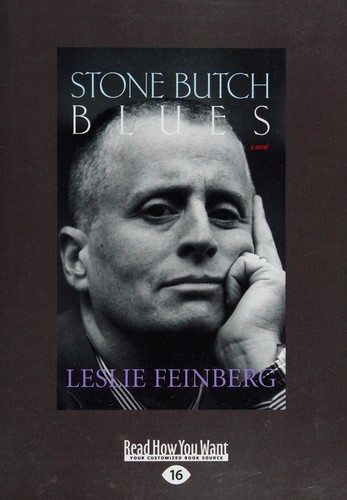
Stone Butch Blues is a historical fiction novel written by Leslie Feinberg about life as a butch lesbian in 1970s America. While fictional, the work also takes inspiration from Feinberg's own life, and she describes it as her "call to action."
I thought this book would feel dated. It doesn’t. It feels urgent & relevant. I’m so glad I finally read it. I also recommend the 20th anniversary edition, which Feinberg made free online. ❤️🔥
"I don't know, Duffy. This hope thing is kind of new for me. I'm a little afraid to get my hopes up too much at once."
"I'm not saying we'll live to see some kind of paradise. But just fighting for change makes you stronger. Not hoping for anything will kill you for sure. Take a chance, Jess. You're already wondering if the world could change. Try imagining a world worth living in, and then ask yourself if that isn't worth fighting for. You've come too far to give up on hope, Jess."
The final exchange between Duffy and Jess sums up the heart of what's at stake for Jess and folks like her who live on the margins of society. It also reminds me of a famous Buffy The Vampire Slayer aphorism, "Strong is fighting". There's no fighting without hope and though favourable outcomes are never guaranteed, the ability …
"I don't know, Duffy. This hope thing is kind of new for me. I'm a little afraid to get my hopes up too much at once."
"I'm not saying we'll live to see some kind of paradise. But just fighting for change makes you stronger. Not hoping for anything will kill you for sure. Take a chance, Jess. You're already wondering if the world could change. Try imagining a world worth living in, and then ask yourself if that isn't worth fighting for. You've come too far to give up on hope, Jess."
The final exchange between Duffy and Jess sums up the heart of what's at stake for Jess and folks like her who live on the margins of society. It also reminds me of a famous Buffy The Vampire Slayer aphorism, "Strong is fighting". There's no fighting without hope and though favourable outcomes are never guaranteed, the ability to dream of a better future and taking action to spark change is what makes survival possible. Every fellow butch, ally, lover, mentor, friend Jess meets lends her strength for her slow, excruciating and relentless path toward finding herself and her people. It's only hope that lets Jess build and rebuild each time her world crumbles, it's hope that lets her find where she belongs.
Stone Butch Blues is a love story about learning to see many forms of uncommon beauty, from the raw tenacity of tough-as-nails single-parent working mums, to tender but tough butch-for-butch lovers, to transfemmes who have gone through great sacrifice to become who they are. It's an elegy for those who have been lost to hatred, oppression and suffering -- whether that loss is monumental but momentary, like when Jess and her friends are grievously wounded by the police and can't go to the hospital, or permanent in the case of those who ended their lives out of despair and certainty that a better world will never be. It's also an atlas of sorts for people who find themselves adrift in a sea of labels and hard lines, who have a difficult time finding the language to describe who they are.
Though Stone Butch Blues has been out in the world for more than 20 years now, it remains a timeless treasure trove of vocabulary and stories for chronic misfits, gender outlaws and anybody who's had to struggle to become or belong.
This semi-autobiographical account follows Jess Goldburg during the 60s and 70s in America. Jess comes out as a butch lesbian in the old gay drag bars with that heavy butch/femme divide* facing regular attacks from bigots and police.
After an SA at school she drops out and goes into manual work and is involved in the unions but her gender nonconformity leads her to save up for testosterone and top surgery in the hopes that going stealth as a man in the workplace can lead to a more stable life. It also shows the racism, anti-semitism, sexual harassment and transphobia inside and outside of the community at that time as Jess navigates her own feelings and identity.
*= I knew that scene was intensely enforced, but this line struck me in particular: “The more I thought about the two of them being lovers, the more it upset me. I couldn’t …
This semi-autobiographical account follows Jess Goldburg during the 60s and 70s in America. Jess comes out as a butch lesbian in the old gay drag bars with that heavy butch/femme divide* facing regular attacks from bigots and police.
After an SA at school she drops out and goes into manual work and is involved in the unions but her gender nonconformity leads her to save up for testosterone and top surgery in the hopes that going stealth as a man in the workplace can lead to a more stable life. It also shows the racism, anti-semitism, sexual harassment and transphobia inside and outside of the community at that time as Jess navigates her own feelings and identity.
*= I knew that scene was intensely enforced, but this line struck me in particular: “The more I thought about the two of them being lovers, the more it upset me. I couldn’t stop thinking about them kissing each other. It was like two guys. Well, two gay guys would be alright. But two butches? How could they be attracted to each other? Who was the femme in bed?”